
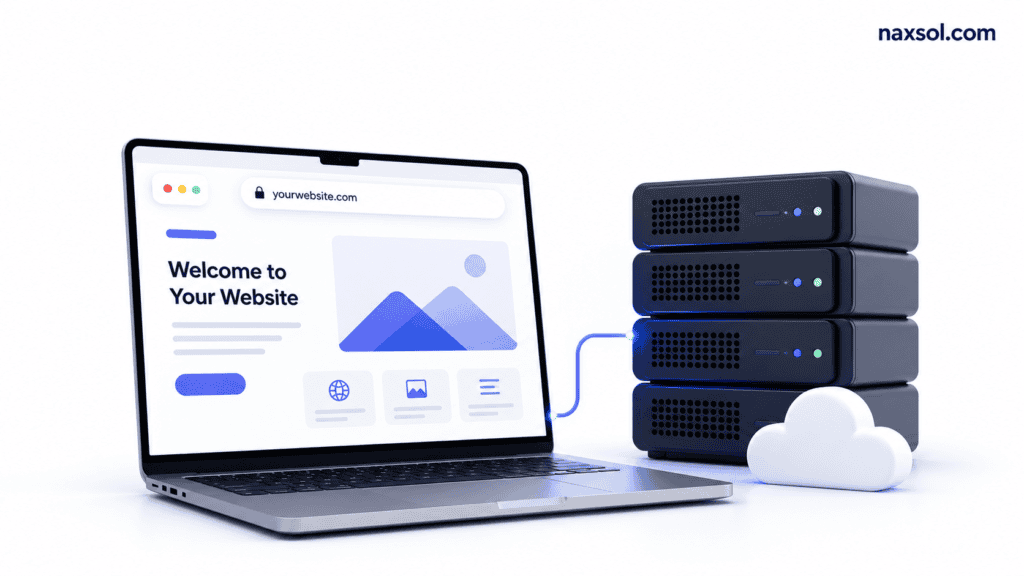
The best web hosting for a new website depends on what you’re building, how much traffic you expect, and how much technical control you need. Most beginners can start with shared hosting or WordPress hosting, while growing websites may eventually need VPS or cloud hosting.
Why Choosing the Right Hosting Matters?
Web hosting affects how fast your website loads, how often it stays online, how secure it is, and how easily it can grow.
Many website owners focus on design and content but discover later that poor hosting causes slow loading times, downtime, and technical limitations. Choosing the right hosting from the beginning can save time, money, and future migrations.
Understanding What Your Website Needs:
Before comparing hosting providers, determine what type of website you’re building.
A personal blog has different requirements than an online store. A portfolio website typically needs fewer resources than a business website that receives daily inquiries.
Your website’s purpose should determine the hosting plan you choose.
Shared Hosting Is Usually the Best Starting Point:
Shared hosting is designed for new websites with moderate traffic.
Multiple websites share server resources, making it one of the most affordable hosting options available. For blogs, portfolios, service businesses, and small company websites, shared hosting is often enough.
Most new website owners do not need advanced hosting on day one.
WordPress Hosting Makes Management Easier:
WordPress hosting is optimized specifically for WordPress websites.
It often includes easier installation, performance optimizations, automatic updates, and tools designed for WordPress users.
If you plan to build your website using WordPress, choosing WordPress hosting can simplify setup and maintenance.
VPS Hosting Becomes Useful as Websites Grow:
Virtual Private Server (VPS) hosting provides dedicated resources within a shared environment.
It gives website owners greater control, better performance, and more flexibility than shared hosting.
VPS hosting is usually considered when traffic increases or applications require additional resources.
Website Speed Should Be a Priority:
Visitors expect websites to load quickly.
A fast hosting environment helps improve user experience, engagement, and overall website performance. Hosting providers that use SSD or NVMe storage generally deliver better performance than older storage technologies.
Website speed is often one of the first signs of hosting quality.
Security Features Are Not Optional:
Every website faces security risks.
Good hosting should include SSL certificates, malware protection, backups, firewall protection, and account security features.
Security becomes even more important if your website collects customer information or processes online payments.
Reliable Support Can Save Hours of Frustration:
Technical issues happen even on well-managed websites.
When problems occur, responsive support can help resolve issues quickly. Hosting providers with knowledgeable support teams often save website owners significant time and stress.
Support quality becomes especially important for beginners.
Scalability Prevents Future Problems:
A hosting plan should support your website today and allow growth tomorrow.
As traffic increases, you may need more storage, bandwidth, processing power, or additional websites under the same account.
Choosing a hosting provider with clear upgrade paths helps avoid unnecessary migrations later.
Signs You May Need Better Hosting:
Your current hosting may no longer be suitable if:
- Pages load slowly
- Downtime becomes frequent
- Traffic growth causes performance issues
- Resource limits are reached regularly
- Security problems occur repeatedly
These are often indicators that your website has outgrown its existing hosting environment.
Common Hosting Mistakes New Website Owners Make:
Many beginners select hosting based solely on price.
Low-cost hosting can be attractive, but performance, reliability, support, and security often have a greater impact on long-term success.
Another common mistake is purchasing advanced hosting resources that are never used. Most new websites benefit from starting simple and upgrading when necessary.
How to Decide Which Hosting Plan Is Right for You?
A simple approach is to match hosting to your website type:
- Personal website → Shared hosting
- Portfolio website → Shared hosting
- Blog → Shared or WordPress hosting
- Business website → Business hosting
- Online store → eCommerce hosting
- Growing website with higher traffic → VPS hosting
The goal is to choose a plan that supports your current needs without paying for resources you don’t yet require.
Start Your Website Today!
If you’re a beginner, you can start with simple and affordable hosting:
Explore hosting plans for beginners
FAQs:
What type of hosting is best for beginners?
Shared hosting and WordPress hosting are typically the easiest and most affordable options for beginners.
How much hosting do I need for a new website?
Most new websites require very little storage and bandwidth. Basic hosting plans are usually sufficient during the early stages.
Should I choose shared hosting or WordPress hosting?
If your website uses WordPress, WordPress hosting often provides a simpler experience. Otherwise, shared hosting is a practical starting point.
Can I upgrade hosting later?
Yes. Most hosting providers allow upgrades as your website grows.
Does hosting affect website speed?
Yes. Hosting quality directly affects loading times, uptime, and overall performance.